Band · United Kingdom
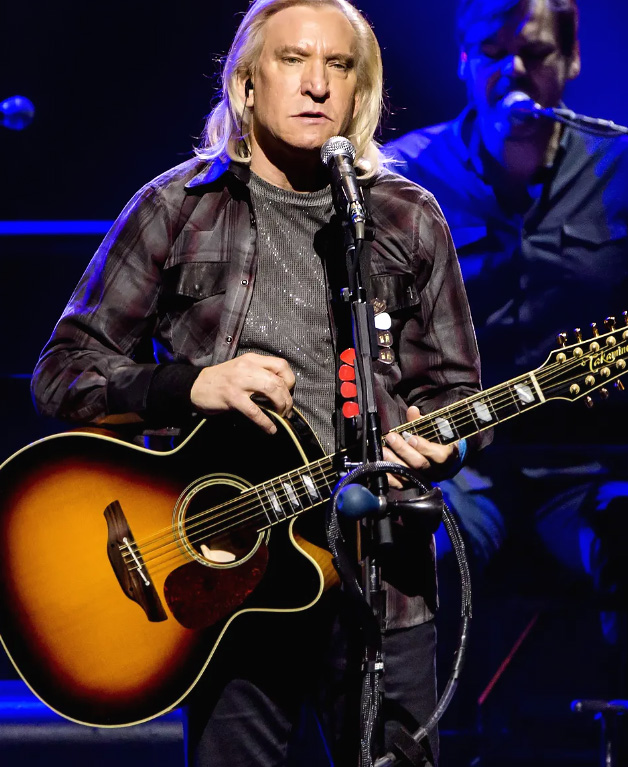
Jethro Tull
Formed in 1967
Listen
Follow
Upcoming shows
- Groningen, Netherlands · MartiniPlaza Tickets
- Nijmegen, Netherlands · De Vereeniging Tickets
- Hoorn, Netherlands · Schouwburg Het Park Tickets
- Rotterdam, Netherlands · De Doelen Tickets
- Berlin, Germany · Tempodrom Tickets
- Magdeburg, Germany · GETEC-Arena Tickets
- Zürich, Switzerland · Kongresshaus Tickets
- Istanbul, Türkiye · Zorlu PSM Tickets
- Bregenz, Austria · Festspielhaus Bregenz Tickets
- Linz, Austria · Brucknerhaus Tickets
- Vienna, Austria · Wiener Konzerthaus Tickets
- Poznań, Poland · Sala Ziemi Poznań CongressCenter Tickets
- Warszawa · Arena Ursynów Tickets
- Zabrze, Poland · Dom Muzyki i Tańca Tickets
- Chelmsford, United Kingdom · Chelmsford Cathedral Tickets
- Ely, United Kingdom · Ely Cathedral Tickets
- Bonn, Germany · Beethovenhalle Tickets
- Lingen, Germany · Emland Arena Tickets
- Lingen (ems), Germany · EmslandArena Tickets
- Almería, Spain · Auditorio Municipal Maestro Padilla Tickets
- Nord de Palma District, Spain · Auditorium de Palma de Mallorca Tickets
- Madrid, Spain · Teatro Lope de Vega Tickets
- Genoa, Italy · Teatro Carlo Felice Tickets
- Padova, Italy · Gran Teatro Geox Tickets
- Hamburg, Germany · CCH- Congress Center Hamburg Tickets
- Bielefeld, Germany · Stadthalle Tickets
- Lugano, Switzerland · LAC Tickets
- Bern, Switzerland · BERNEXPO Festhalle (Stage) Tickets
- Stuttgart, Germany · Liederhalle Tickets
- Munich, Germany · Isarphilharmonie im Gasteig HP8 Tickets
- Bern, Switzerland · Festhalle Tickets
- Nuremberg, Germany · Meistersingerhalle Tickets
Add the dates to my calendar · RSS feed
Tour dates elsewhere: Bandsintown · Songkick
About
Jethro Tull are a British rock band formed in Blackpool, Lancashire, in 1967. Emerging from the 1960s British blues scene, the band soon developed a distinctive progressive rock sound, blending hard rock, English folk music and classical music, while undergoing numerous stylistic shifts throughout its history. The band was founded and has been continuously led by Ian Anderson, its principal composer, lead vocalist, and multi-instrumentalist best known for his flute playing. The group has featured a succession of musicians throughout its history, including significant contributors such as long-time guitarist Martin Barre, bassists Glenn Cornick, Jeffrey Hammond, John Glascock, Dave Pegg and Jonathan Noyce, drummers Clive Bunker, Barrie "Barriemore" Barlow and Doane Perry, and keyboardists John Evan, Dee Palmer, Peter-John Vettese and Andrew Giddings.
After gaining attention on the London club circuit, Jethro Tull released their debut album This Was in 1968. After a key line-up change which saw original guitarist Mick Abrahams replaced by Barre, the band achieved their first major success the following year with their folk-influenced second album Stand Up, which reached No. 1 in the UK. Aqualung (1971) marked the band's international breakthrough and became their most commercially successful album, while subsequent releases such as Thick as a Brick (1972) fully established their progressive rock identity. Throughout the 1970s the band maintained an intense schedule of touring and recording, releasing one studio album every year and expanding their musical scope through concept albums and increasingly complex arrangements. In the late 1970s the band shifted towards folk rock, before a major line-up change led to a period influenced by electronic rock in the early 1980s. The band returned to a hard rock sound with Crest of a Knave (1987), which earned them their only Grammy Award, and explored world music influences in the 1990s. Jethro Tull have sold an estimated 60 million albums worldwide, with 11 gold and 5 platinum albums. They have been described by Rolling Stone as "one of the most commercially successful and eccentric progressive rock bands."
The band ceased studio recording activity in the 2000s, but continued to tour until disbanding in 2011. Following the band's split, Anderson and Barre both pursued separate solo careers, with Anderson's band billed variously as both "Jethro Tull" and "Ian Anderson" solo. From 2017 onward, Anderson revived the Jethro Tull name without Barre's involvement and returned to releasing new studio albums in the 2020s, presenting the group as a continuation of the band under his sole leadership rather than as a reunion of past line-ups.
From Wikipedia, CC BY-SA 4.0.
Also in Français
Jethro Tull est un groupe britannique de rock, originaire de Blackpool, en Angleterre, formé dans la seconde partie des années 1960. Sa musique est marquée par le style vocal très particulier du leader Ian Anderson et son travail unique de flûtiste, et par des constructions de chansons inhabituelles et souvent complexes. La musique du groupe incorpore des éléments de musique classique, celtique, hard rock, blues ainsi que des phases d'art rock alternatif et de rock progressif.
Le fondateur du groupe Ian Anderson, chef d'orchestre, compositeur, chanteur principal et seul membre constant, est un multi-instrumentiste qui joue principalement de la flûte traversière et de la guitare acoustique. Le groupe compte une succession de musiciens au fil des décennies — dont d'importants contributeurs tels que les guitaristes Mick Abrahams et Martin Barre (le membre le plus ancien après Anderson) ; les bassistes Glenn Cornick, Jeffrey Hammond, John Glascock, Dave Pegg, Jonathan Noyce et David Goodier ; les batteurs Clive Bunker, Barrie "Barriemore" Barlow et Doane Perry et les claviéristes John Evan, Dee Palmer, Peter-John Vettese, Andrew Giddings et John O'Hara.
Le groupe obtient d'abord une reconnaissance modérée sur la scène des clubs londoniens et sort son premier album, This Was, en 1968. Après le remplacement guitariste original, Mick Abrahams, par Martin Barre, le groupe sort en 1969 un deuxième album aux accents folk, Stand Up, qui atteint la première place au Royaume-Uni, offrant au groupe un premier grand succès commercial. Des tournées régulières au Royaume-Uni et aux États-Unis s'ensuivent. Le style du groupe s'oriente vers le rock progressif à partir d'Aqualung (1971), qui devient le plus grand succès commercial du groupe.
À la fin des années 1970, le groupe s'oriente à nouveau vers le folk rock, puis après des changements majeurs de composition au début des années 1980, se tourne vers le rock électronique. Il remporte son unique Grammy Award pour l'album Crest of a Knave sorti en 1987, qui marquait le retour au hard-rock.
Jethro Tull aurait vendu environ 60 millions d'albums dans le monde, avec 11 albums d'or et 5 albums de platine[réf. nécessaire]. Le groupe est décrit par le magazine Rolling Stone comme « l'un des groupes de rock progressif les plus commerciaux et les plus excentriques ».
Le groupe cesse ses activités d'enregistrement en studio dans les années 2000, mais continue à faire des tournées jusqu'à sa séparation en 2011. Ensuite, Anderson et Barre continuent d'enregistrer et de tourner en tant qu'artistes solo, le groupe d'Anderson étant présenté sous le nom de « Jethro Tull » (et simplement « Ian Anderson » lorsqu'il tourne en solo).
Anderson déclare en 2014 que Jethro Tull est « plus ou moins arrivé à sa fin ». Il relance cependant le nom Jethro Tull à partir de 2017, puis sort de nouveaux albums studio dans les années 2020. Le groupe actuel comprend des musiciens qui faisaient partie de Jethro Tull au cours des dernières années de son existence initiale, ainsi que de nouveaux musiciens issus du groupe solo d'Anderson, sans l'implication de Barre. Son dernier album en date, Curious Ruminant, est sorti le 7 mars 2025.
Wikipedia, CC BY-SA 4.0
Discography
Albums
- 1968 This Was
- 1969 Stand Up
- 1970 My God!
- 1970 Benefit
- 1971 Aqualung
- 1972 Thick as a Brick
- 1973 A Passion Play
- 1974 WarChild
- 1975 Minstrel in the Gallery
- 1976 Too Old to Rock ’n’ Roll: Too Young to Die!
- 1977 Songs From the Wood
- 1978 Heavy Horses
Show all (25)
- 1979 Stormwatch
- 1980 A
- 1982 The Broadsword and the Beast
- 1984 Under Wraps
- 1987 Crest of a Knave
- 1989 Rock Island
- 1991 Catfish Rising
- 1995 Roots to Branches
- 1999 J‐Tull Dot Com
- 2003 The Jethro Tull Christmas Album
- 2022 The Zealot Gene
- 2023 RökFlöte
- 2025 Curious Ruminant
EPs
- 1971 Life Is a Long Song
- 1976 Ring Out, Solstice Bells
- 2004 Ring Out Solstice Bells
- 2013 Living in the Past
Singles
- 1968 Love Story / A Song for Jeffrey
- 1968 Sunshine Day / Aeroplane
- 1968 A Song for Jeffrey / One for John Gee
- 1968 Love Story / A Christmas Song
- 1969 Living in the Past / Driving Song
- 1969 Sweet Dream / 17
- 1970 The Witch’s Promise / Teacher
- 1970 Inside / Alive and Well and Living In
- 1972 Living in the Past / Christmas Song
- 1974 Bungle in the Jungle
- 1987 Living in the Past / The Witch’s Promise
- 1988 Part of the Machine
Show all (22)
- 1988 Said She Was a Dancer
- 1989 Another Christmas Song
- 1991 Still Loving You Tonight
- 1993 Living in the (Slightly More Recent) Past
- 1999 Bends Like a Willow
- 1999 Dot Com
- 2000 A Gift of Roses
- 2025 Curious Ruminant
- 2025 The Tipu House
- 2025 Teacher